
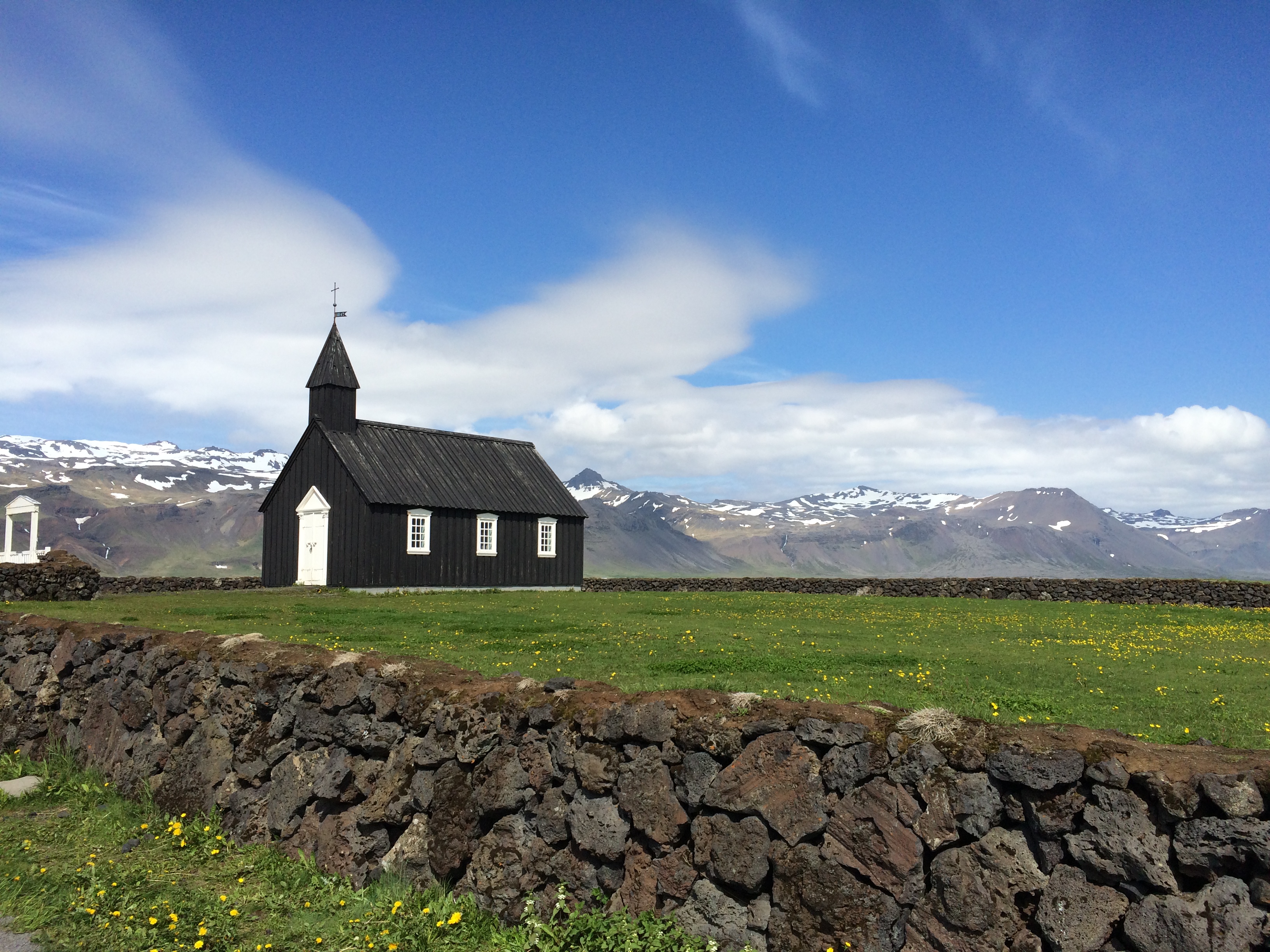
Buðir black church, Snaefellsnes peninsula, Western tip of Iceland
Fourth, culture and tradition should inform leadership. Wherever we went, we were surprised by the influential strength of local culture, and how effortlessly it blends into modern life. Elves, trolls, and fairies, which seem fanciful to us outsiders, are an ingrained aspect of local folklore and belief in their presence continues.
Additionally, despite being over a millennium old, the Icelandic sagas still hold sway and continue to be considered one of the pillars of Icelandic culture. It surprised me to learn that the Icelandic language has not changed much over 1000 years (apart from in vocabulary), attesting to how much stock the people place into their culture.
Similarly, unlike in other Scandinavian countries, despite their advanced levels of socioeconomic development, there is a deference to the religious traditions of the past. In every small fishing town that we encountered, we found a small Spartan church with bells ringing at every hour. Whether these are attended is another matter altogether.
Regardless, the more that I think about it, leaders don’t develop in isolation. Rather, they are the product of culture, and tradition. They often have a role in undermining or reforming these, but nevertheless are products thereof. If we aspire to leadership, we should critically look at our culture and determine how we fit, and how we do not fit, into its bounds.